
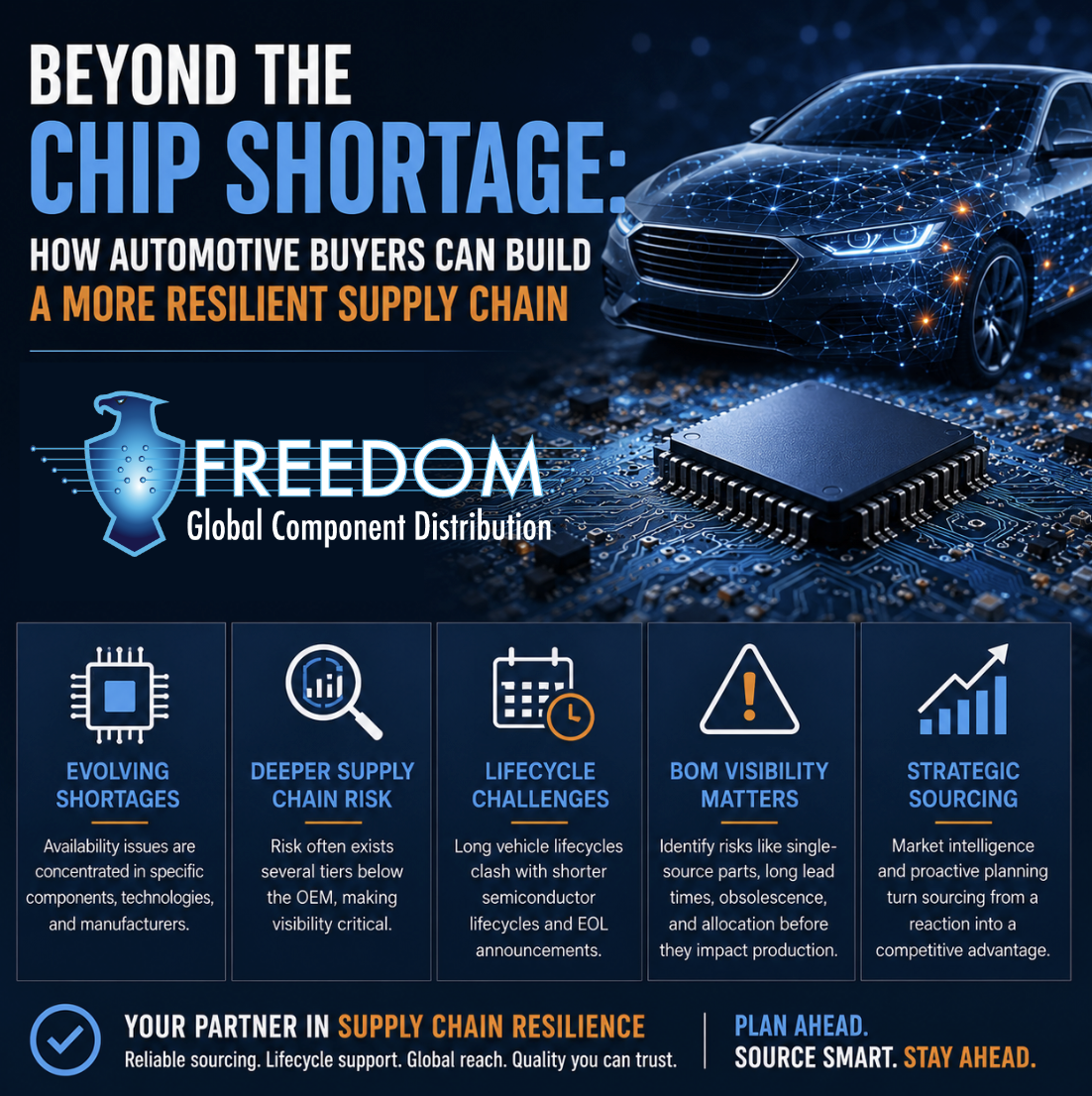


Click Image To Enlarge
The automotive semiconductor supply chain has been reshaped by rapid technological change, increasingly complex vehicle electronics, and continued uncertainty across the global component market. While the widespread chip shortages experienced in recent years have eased in many areas, new sourcing challenges are being created by advanced driver assistance systems, electrification, connectivity, software-defined vehicles, and shorter semiconductor lifecycles. As a result, greater visibility is being required throughout the supply chain, and a more proactive approach to electronic component sourcing is being adopted by automotive manufacturers and suppliers.
The Automotive Chip Shortage Has Evolved
For automotive buyers, the semiconductor supply chain is no longer defined by one widespread shortage affecting nearly every category of component.
Instead, availability challenges can be concentrated around specific manufacturers, technologies, component families, and individual part numbers. Microcontrollers, power semiconductors, memory, sensors, connectivity components, and other specialized devices can each be affected differently by changing demand and manufacturing capacity.
This creates a different type of sourcing challenge.
A component may be readily available today while another part within the same bill of materials faces extended lead times, allocation, pricing pressure, or an approaching end-of-life notice.
Therefore, supply chain resilience is increasingly dependent on identifying vulnerabilities before they become production problems.
Today's Vehicles Depend on More Electronic Components
Modern vehicles have become sophisticated electronic platforms.
Electronic systems are now relied upon for powertrain management, battery management, infotainment, connectivity, safety systems, sensors, advanced driver assistance systems, and numerous other functions.
At the same time, the continued development of electric vehicles and software-defined vehicle architectures is increasing the importance of semiconductor technology throughout the automotive industry.
As more functionality becomes dependent on electronics, the consequences of a component shortage can also become greater.
A relatively inexpensive electronic component can potentially delay the completion of a much more valuable vehicle or system.
For procurement teams, this makes component availability more than a purchasing concern. It becomes a production continuity concern.
EV Growth Is Changing Electronic Component Demand
Electric vehicles require a different electronic architecture than traditional internal combustion vehicles.
Battery management systems, power conversion, charging infrastructure, thermal management, high-voltage systems, connectivity, and electronic control systems all depend on specialized components.
As EV platforms continue to evolve, manufacturers and suppliers may need to source components across multiple categories while simultaneously preparing for changing designs and product generations.
This can create situations where one component is entering high demand while another is approaching the end of its lifecycle.
For procurement teams, the challenge becomes balancing today’s production requirements with tomorrow’s technology roadmap.
Plan Ahead for a More Resilient Automotive Supply Chain
Automotive supply chain risks are not always immediately visible. A shortage can develop several tiers below the OEM, while semiconductor lifecycles, allocation, extended lead times, and component obsolescence can create additional challenges. Better BOM visibility allows buyers to identify single-source components, lifecycle concerns, and potential availability issues before they disrupt production.
A proactive sourcing strategy provides more options when market conditions change. By monitoring component availability and lifecycle risks early, automotive buyers can secure inventory, explore alternate sources, and prepare for future requirements.
Freedom USA supports that strategy through global component sourcing, market intelligence, vetted suppliers, and rigorous quality processes, helping customers address sourcing challenges before they become production emergencies.
Why Automotive Buyers Work With Freedom USA
Proactive Market Intelligence
Component availability, lead times, pricing trends, and market conditions are continually monitored to help customers identify potential sourcing challenges.
Global Component Sourcing
Access to a broad global supplier network provides additional options when traditional distribution channels cannot meet a requirement.
Obsolescence and EOL Support
Lifecycle challenges can be addressed through sourcing assistance, inventory planning, last-time-buy strategies, and support for obsolete and hard-to-find components.
Extensive Electronic Component Inventory
Freedom USA maintains access to hundreds of millions of electronic components from more than 1,000 manufacturers.
Vetted Supply Network
A global network of qualified suppliers provides expanded sourcing capabilities while helping reduce procurement risk.
Quality-Focused Processes
Components are supported by established inspection, testing, handling, supplier qualification, and quality procedures.
More Than a Component Source
Freedom USA provides the market knowledge, sourcing experience, and supply chain support required to help customers prepare for challenges before they become production emergencies.
Don't Wait Until a Critical Component Becomes a Critical Problem
Whether you are planning future production, managing an automotive BOM, facing extended lead times, or searching for an allocated, obsolete, or hard-to-find electronic component, Freedom USA can help identify sourcing options.
Check out The Latest Article

"Electronics
Revolution
Under The
Hood"
Frequently Asked Questions
Automotive semiconductor supply chain challenges can result from changing demand, limited manufacturing capacity, geopolitical disruptions, component allocation, raw material constraints, extended lead times, and semiconductor lifecycle changes. Increasing electronic content in modern vehicles can also create greater dependence on specific components and technologies.
The widespread semiconductor shortages experienced earlier in the decade have eased across many product categories, but automotive buyers can still encounter shortages involving specific components, manufacturers, or technologies. Supply challenges are increasingly targeted rather than universal, making component-level visibility especially important.
Automotive platforms can remain in production and service longer than many semiconductor product lifecycles. Components may therefore become obsolete or reach end-of-life while they are still required for vehicle production, replacement systems, or long-term support.
An independent electronic component distributor can provide additional sourcing options when parts are allocated, obsolete, unavailable through traditional channels, or subject to extended lead times. Experienced distributors can also provide market intelligence, global sourcing capabilities, inventory solutions, and component lifecycle support.
Yes. Freedom USA specializes in sourcing allocated, obsolete, end-of-life, and hard-to-find electronic components through an extensive global supplier network. Quality, supplier qualification, inspection, and testing processes are used to help reduce sourcing risk.
to experience why so many businesses continue to rely on a partner that places your success at the center of everything.
Connect with Freedom and secure the components and service your business demands.
Join Our mailing List
Benefit from Industry Trends & Insights
Our Clients Are Our Top Priority